
CPTED (Crime Prevention Through Environmental Design)
What is CPTED? — Protecting Your Space Through Design
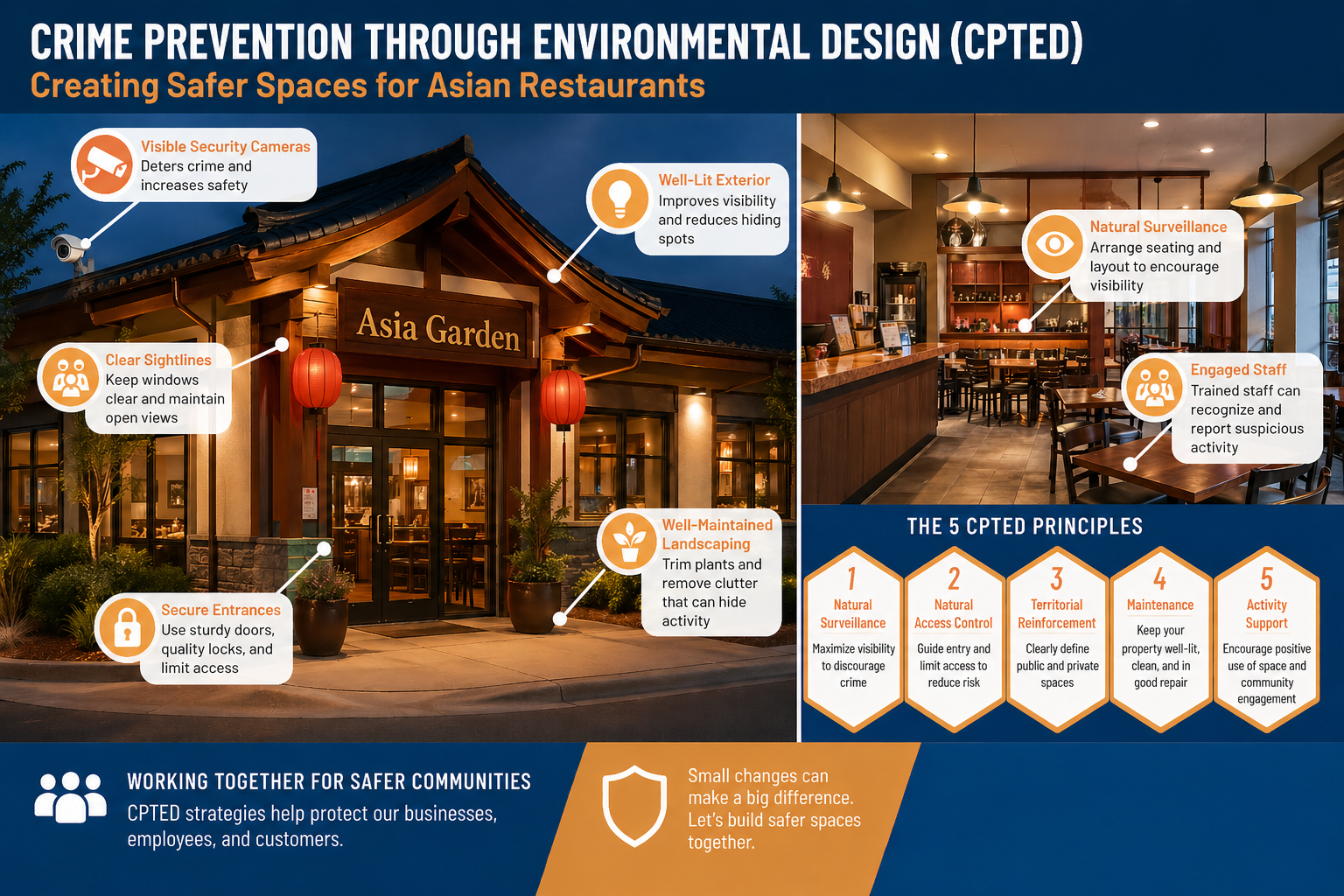
CPTED (pronounced sep-ted) stands for Crime Prevention Through Environmental Design. It is a multi-disciplinary approach to deterring criminal behavior through the strategic design of the built environment.
For AAPI business owners and residents, CPTED is not about turning your property into a fortress. Instead, it uses psychological and physical cues to discourage potential offenders by making them feel "exposed" or "unwelcome."
The Four Core Principles of CPTED
#1. Natural Surveillance: This involves keeping sightlines clear so that intruders can be easily seen. Measures include trimming high bushes, installing bright LED lighting in parking lots, and ensuring windows are not blocked by posters.
#2. Territorial Reinforcement: Use physical designs to distinguish between public and private spaces. Fences, clear signage (e.g., "Customer Parking Only"), and well-maintained landscaping send a signal that "someone is in charge here.
Why You Should Request a CPTED Assessment
#3. Natural Access Control: Use clear paths and limited entrances to direct people. This reduces the opportunities for criminals to find unmonitored entry points or hiding spots.
#4. Maintenance: The "Broken Windows" theory applies here. Promptly cleaning graffiti and repairing broken windows shows that the community is alert and cares about its security.
Recent incidents, such as the violent shovel attack on restaurant staff in Orlando, underscore the need for proactive prevention. Most local Police Departments in Florida have specialized CPTED officers who provide free security assessments for homes and businesses.
During an assessment, an officer will walk through your property to identify "blind spots" and recommend specific improvements—such as moving a security camera or upgrading a lock—to make you a less likely target for crime.
Action Step: Call your local police department’s non-emergency line and ask for a "CPTED Security Survey" or "Site Assessment."
Additional Support Resources
Report Hate Crimes (FBI Tips): 1-800-225-5324
FAAJA Official Website:www.faaja.org
Remember: By strengthening our physical environment, we are not just protecting property; we are demonstrating the unity and resilience of the AAPI community.
Stay Safe. Stay Informed. Stay Empowered.
Florida Safety Contact Directory
Central Florida
Orlando: (407) 246-2470 (Orlando Police Dept)
Tampa: (813) 231-6130 (Tampa Police Dept)
Jacksonville: (904) 630-0500 (Jacksonville Sheriff's Office)
South Florida
Miami: (305) 471-2400 (Miami-Dade Police Dept)
Palm Beach: (561) 688-3000 (Palm Beach County Sheriff)
Fort Lauderdale: (954) 764-4357 (Non-Emergency)
North Florida
Gainesville: (352) 955-1818 (Alachua County Sheriff)
Tallahassee: (850) 606-5800 (Leon County Sheriff)
For IMMEDIATE DANGER, always call 911.
For non-emergency reporting, CPTED requests, or safety inquiries, use the following numbers for your region: