
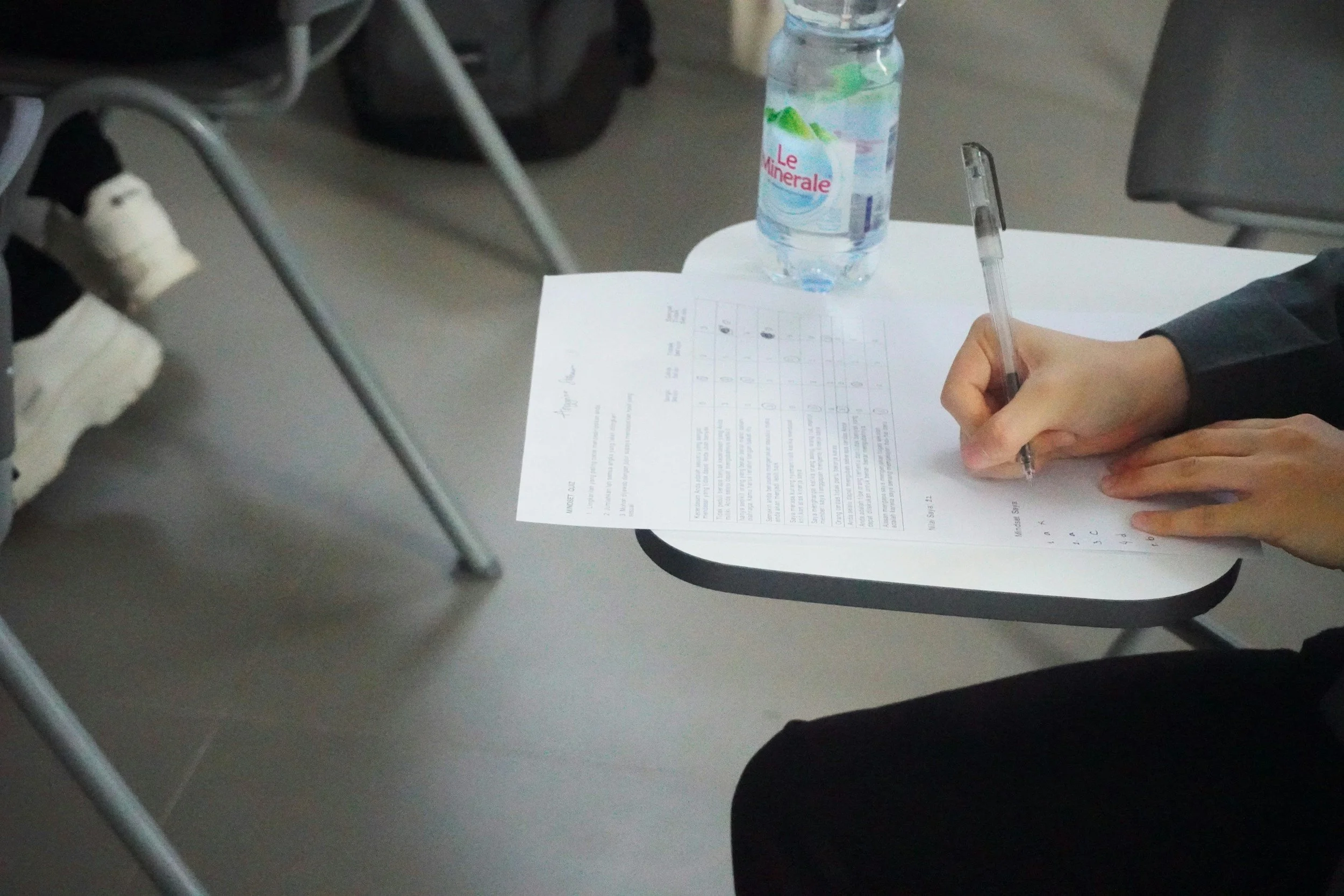
2025 Asian American Community Multi-language Safety Survey
Survey Overview
Survey Background and Methodology
The survey was conducted to better understand the lived experiences and safety-related needs of Asian American adults in Florida, with a particular focus on public safety, racial harassment, and hate crimes.
Geographic Distribution
Respondents were primarily concentrated in Tallahassee and Central Florida (e.g., the Orlando area), with relatively lower participation from South Florida.
Community Safety & Youth Development
FAAJA is committed to enhancing community well-being through a proactive, data-driven approach to safety and resource accessibility. By conducting statewide surveys, we identify the specific needs of AAPI residents to help bridge gaps in institutional trust and public safety awareness. In response to these findings, we host Safety and Awareness Workshops across South, Central, and North Florida. These sessions provide participants with practical skills, situational awareness, and mental preparedness, fostering a collective sense of confidence and security within the neighborhood.
Sample
A total of 281 valid responses were collected from adult participants through both online and paper-based surveys. Respondents represented multiple regions across Florida, including South Florida (e.g., Miami, Fort Lauderdale), Central Florida (Greater Orlando and Greater Tampa Bay areas), and North Florida (e.g., Tallahassee).
A total of 67 valid survey responses were collected from Asian American youth through both online and paper-based surveys, across Florida, including South Florida (e.g., Miami, Fort Lauderdale), Central Florida (Greater Orlando and Greater Tampa Bay areas), and North Florida (e.g., Tallahassee).
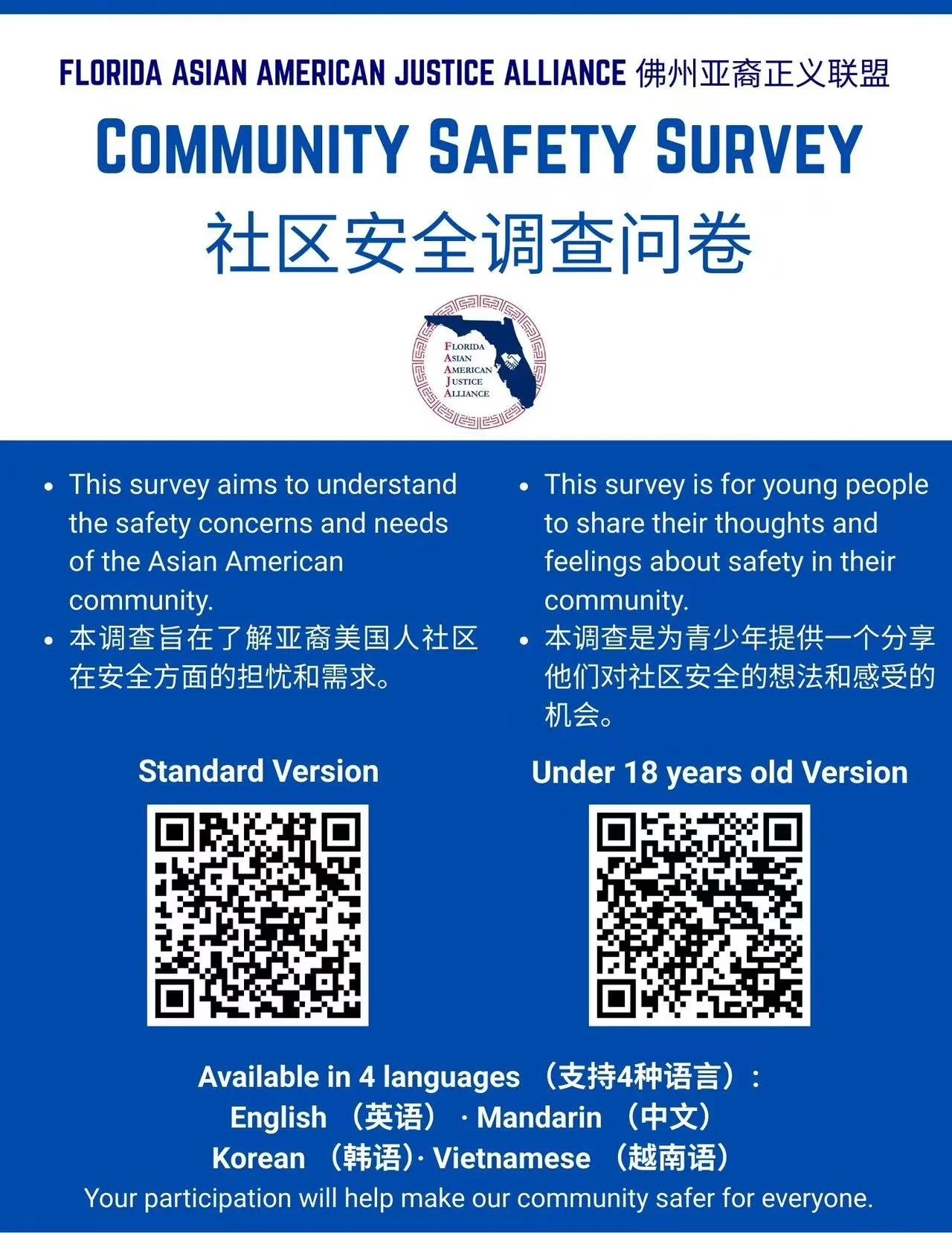
Please scan the QR Code above or click the link to access:
High-Level Results of Community Safety Experiences and Needs
Surveys of Asian American adults and youth across Florida show that community safety concerns are widespread and multidimensional, shaped by racial harassment, environmental conditions, trust in institutions, and access to support.
Persistent safety concerns exist despite limited physical victimization. Among adults, more than half reported concern about physical assault, harassment, or robbery, even though most had not personally experienced violent crime. Similarly, most youth reported feeling generally safe at school or in their neighborhoods; however, many described this safety as situational, indicating underlying vulnerability rather than consistent security.
Anti-Asian harassment and discrimination are pervasive across age groups. Over half of adults and youth reported experiencing or witnessing verbal harassment or bullying related to their Asian identity. Youth reported especially high levels of repeated verbal harassment, demonstrating that identity-based harm is a recurring and normalized experience in schools and communities.
Trust gaps and limited awareness of support resources remain significant challenges. While most adults expressed some confidence in reporting incidents to law enforcement, a notable minority cited language barriers, fear of discrimination, or past negative experiences. Youth primarily rely on family and friends for support, with limited trust in institutions, and some reported having no trusted adult to turn to. Across both groups, awareness of hate crime victim support organizations was extremely low, indicating major outreach and accessibility gaps.
Communities expressed strong demand for prevention and empowerment. Both adults and youth prioritized improved lighting, surveillance, and visible safety measures. There was also strong interest in self-defense, de-escalation, and safety education, viewed as tools for empowerment rather than aggression. Youth additionally emphasized emotional well-being, trusted relationships, and cultural pride as essential to feeling safe.
Overall, the surveys highlight the need for holistic, culturally responsive safety strategies that integrate infrastructure improvements, anti-hate efforts, emotional support, and community trust-building across generations.